

I read a book a while back called The Psychology of Money by Morgan Housel. It’s probably the best book I’ve ever read about money but there’s a line in it that I like;
Getting rich and staying rich are two completely different skills.
Getting rich requires risk. Ambition. A willingness to bet on yourself when nobody else will. Staying rich requires something different entirely - discipline, diversification, knowing when to take money off the table.
Morgan Housel explains that the same traits that build empires can destroy them. The courage that takes you from nothing to everything can, in the wrong moment, take you from everything back to nothing. It’s not quite greed, I think it’s lazy to say that.
The same traits that can make someone extraordinarily successful can also make them extraordinarily reckless.
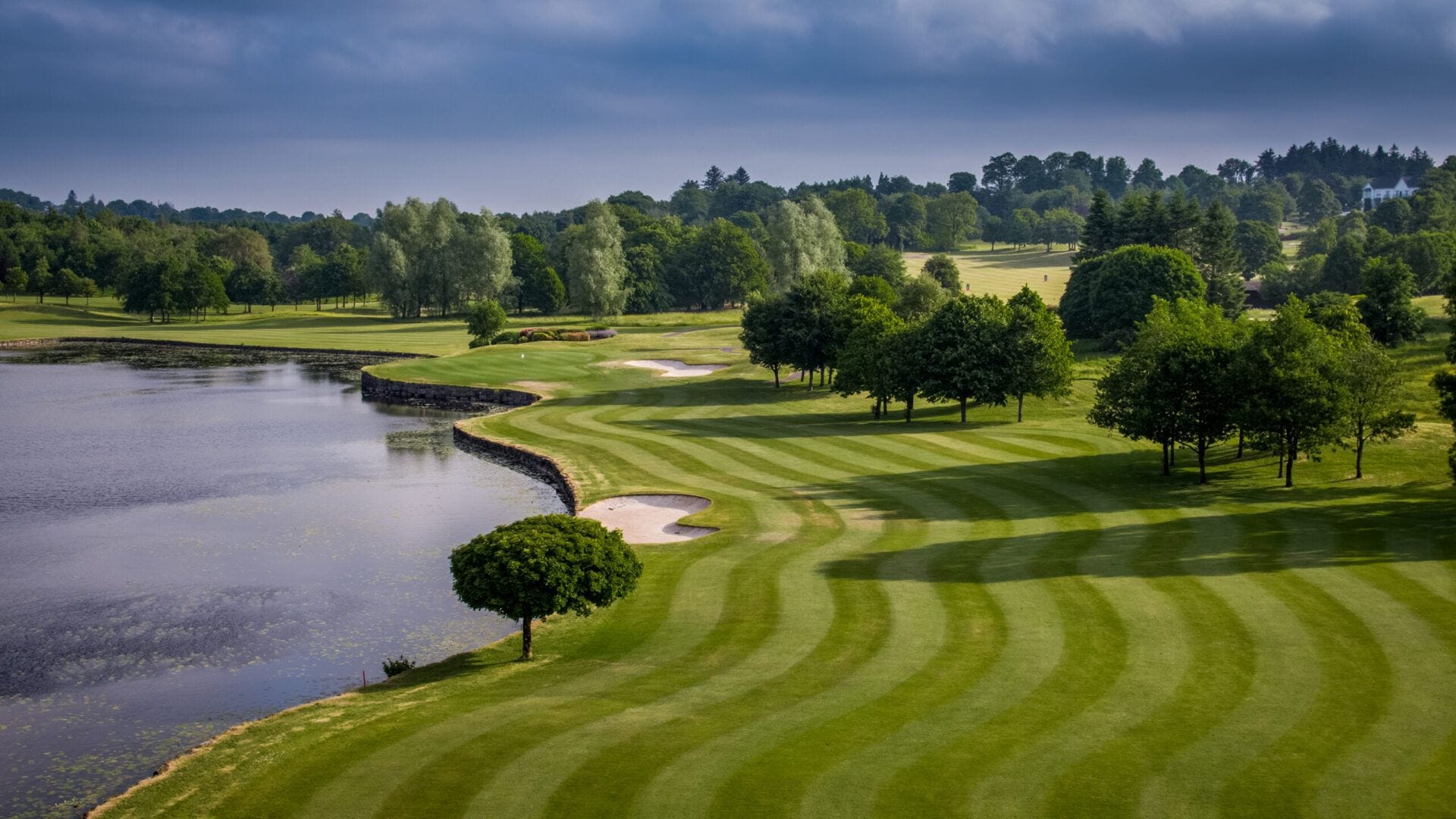
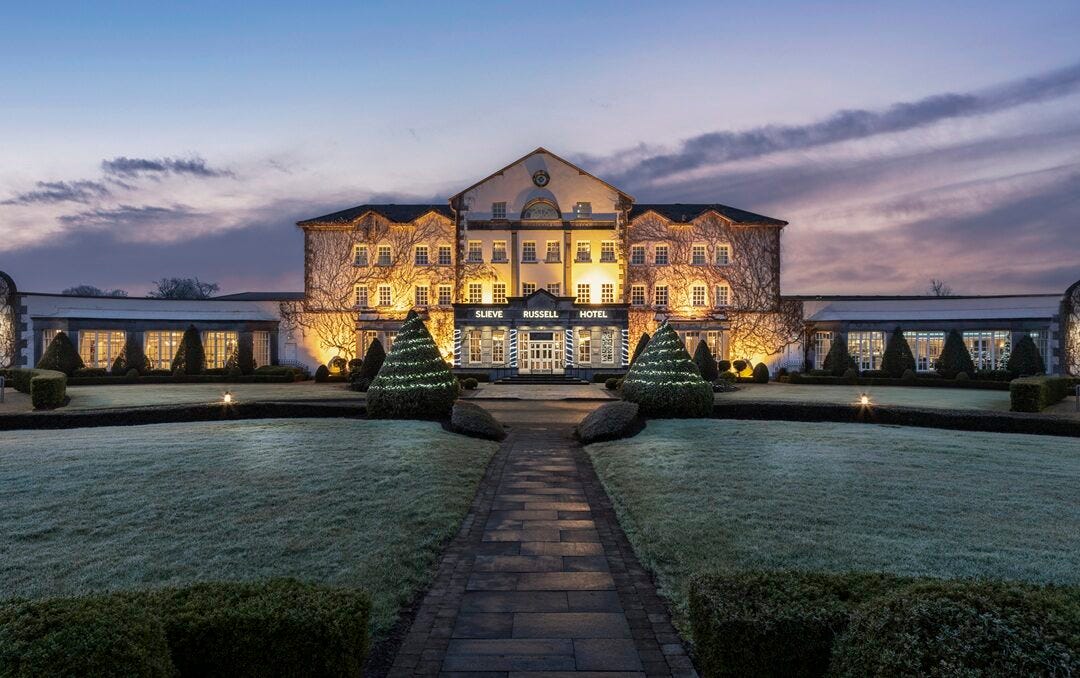
Last week I walked along the lush fairways of one of Ireland’s best inland golf courses, Slieve Russell in County Cavan in the heart of the Irish midlands. Looking out over the course sits a beautiful mansion owned by a man who was once Ireland’s richest man.
This is the story of how he lost it.
A Farm in Fermanagh
Sean Quinn left school at 15 and went to work on the family farm in Derrylin, County Fermanagh. No connections, no capital, no obvious path to anything beyond the life his father and grandfather had lived before him. He lived in a poor part of Ireland - the land wasn’t good for farming - you could make a good case that this was the part of Ireland where the British Empire drew the line - “you Paddies can have it”.
But Sean had an eye for opportunity. Where everyone else saw problems, he saw something else.
In the 1970s he noticed that the land around his farm contained gravel. He borrowed £100 to buy a crusher and started selling it. That is where it began. A teenager with a borrowed machine and a patch of ground, selling gravel to builders in the border counties of Ireland. Up until this point, the marsh and the gravel were the exact reason why the people of this part of Ireland had struggled.
Sean Quinn looked at the very problem with this land and turned it into an opportunity.
Quinn was just getting started.
The Empire Grew
From that quarry, he built Quinn Glass, a state-of-the-art manufacturing plant so successful that its only rival on the island of Ireland closed down just four years after it opened.
Then he got into insurance. Sean Quinn had dozens of trucks on the road and after years paying millions in insurance he wondered to himself - maybe I could set up an insurance company.
Quinn Direct became one of the most disruptive forces in the Irish motor insurance market - undercutting competitors and growing to become one of the most profitable insurance businesses in the country.
Profits for Quinn Insurance reached €232 million in 2005.
By 2008 his personal wealth was estimated at €4.72 billion, making him the richest person in Ireland. Forbes listed him among the world’s billionaires. The Quinn Group employed more than 5,500 people throughout Ireland.
A man from a farm in Fermanagh. No degree. No family money. No head start.
Just an extraordinary ability to see what others missed and the courage to back himself. Quinn was a hero in this part of Ireland and rightly so - he brought jobs to this part of the country that hadn’t existed before. All the “big jobs” were around Ireland’s major cities of Dublin, Cork and Galway. Quinn gave the people of Cavan and Fermanagh employment never before seen in this part of Ireland.
Building Slieve Russell
At the height of his success Sean Quinn wanted to do something for the community that had shaped him. The border counties of Cavan and Fermanagh didn’t have any five star hotels and championship golf courses. He decided to change that.
He built Slieve Russell Hotel and Golf Club in Ballyconnell, County Cavan, in his eyes, as a gift to the region. A world class facility in a part of the country that had never had one. Slieve Russell would provide more jobs but it also gave a reason for people to come to this part of Ireland that they had never had before.
I’d heard a lot about Slieve Russell over the years (my Dad is from Cavan) but I only got the chance to play it for the first time last week.
The golf course is simply one of the best parkland courses in Ireland. Difficult but fair and arguably the best greens on the island of Ireland. It’s not particularly famous outside of Ireland. Even within Ireland it’s the type of course that if you bring it up, people will say something like, “oh yeah I’ve heard that’s a decent track, must get up there some day”.
It’s ranked in the top 10 parkland courses of Ireland - behind the likes of Adare Manor, Druids Glen etc… Irish Golfer Magazine has it 26 in the country, 2 spots behind one of Ireland’s most famous courses, The Old Head of Kinsale. For context, the green fees at Old Head will run you €500 and that’s if you can get a spot which you might have to book 18 months in advance but you can play Slieve Russell for €65 and could probably get a spot on the timesheet tomorrow if you called the pro shop.
There is of course nuance to the rankings - the experience of playing Old Head is pretty incredible but still, one is over 7x the price of the other.
Courses of this quality usually charge double or triple that. Because it is so much cheaper than you would expect, people assume it cannot be as good as it is.
It is.
Quinn lost $4.5 billion
Quinn had started in business in the 70s and had risen to become Ireland’s wealthiest man. Every new venture he started was more successful than the previous one.
In the early 2000s he signed up for a subscription to the newspaper, the Financial Times, and 6 days a week, that newspaper was delivered to Sean Quinn’s home that sits on site at Slieve Russell and every morning, Sean Quinn would read the financial news of the world.
This daily delivery of a newspaper would change everything.
He started reading about the stock market and in particular, he read about a product called “contracts for difference” — a type of financial contract where the buyer pays the seller the difference between the current and contract-time value of an asset. I won’t bore you with the details but basically, you could invest in stocks without having to outlay all the cash for it and it could make you a lot of money when the share price was going up.
Quinn invested heavily in an Irish bank called Anglo Irish Bank using these contracts for difference. This was a small bank in the grand scheme of things but it was also one of the most profitable little banks in the world and was making a lot of money by lending into the property market.
But Anglo Irish Bank collapsed during the 2008 financial crash and Sean Quinn was exposed.
The men running the bank believed Quinn held around 4% or 5% of their stock - a significant stake.
Quinn actually owned 25% of the bank, a stake worth €3.25 billion ($4.75 billion USD at the time). Almost his entire net worth.
When the bank collapsed, so did Quinn’s empire.
Not only did he lose his stake but he was also on the hook for some of its debt to their customers, to the tune of around $2 billion.
It was a mess.
I am not here to rub salt in these wounds. It has been written about extensively and I am not here to add to that pile.
What I will say is this.
The same traits that took Sean Quinn from a borrowed crusher on a Fermanagh farm to a €4.7 billion empire - the risk appetite, the conviction, the willingness to back himself when the stakes were enormous - were the same traits that led him to Anglo Irish Bank.
Morgan Housel was right. Getting rich and staying rich are two different skills. They require almost opposite instincts.
It is easy to sit back with the benefit of hindsight and call someone a reckless gambler. Greedy.
But the people who called Sean Quinn reckless in 2009 were the same people who called him a genius in 2005. The risk did not change. The outcome did.
He said himself - “I was always greedy, but greedy for what? I was never greedy for money.”
I think I believe him. The man who built a five star hotel in rural Cavan to give his community something to be proud of was not greedy for money. Maybe he was greedy for something harder to define.
Legacy, perhaps. Significance.
The feeling of building something that outlasted himself. Maybe it’s the same reason men built statues of themselves in the ancient world.
Sean Quinn’s statue is Slieve Russell.
Legacy
Slieve Russell survived it all and as we walked along the fairways my mate said to me that Quinn still walks the course most days, not playing, just walking the grounds.
The course was in magnificent condition. The greens were as good as anything I have played this year. There were people working on the paths, taking pride in the place. The hotel behind us looked as good as the day it opened. It’s under new ownership now.
Sean Quinn lost almost everything. But Slieve Russell is still going strong. Still welcoming people. Still giving the community of Cavan something to be proud of.
If you get the chance - get yourself to Slieve Russell. It is one of the best value rounds of golf in Ireland and one of the most interesting places to think about what it means to build something that outlasts you.
The Caddie’s Line
Slieve Russell is ranked in the top 10 parkland courses in Ireland. Midweek green fees start at €65. At that price it is almost certainly the best value round of golf at that standard anywhere in the country.
The Read
The Psychology of Money by Morgan Housel. Not a golf book. One of the best books about money, risk and human behaviour I have ever read.
Fascinating insight into an excellent golf facility. I loved the golfing experience supported by an excellent hotel https://www.golfshake.com/course/news/14130/PGA_National_Ireland_Slieve_Russell_Feature_Review.html
Conor, if you're not careful, I'll be over to play golf 😉