

Welcome to the drop for this week where you get 3 things:
The drop - a deep dive into a golf experience or the business of golf
The caddie’s line - 1 nugget of information for your Sunday fourball
The read - something worth reading from the world of golf
Apparently this is one of the richest family in golf and you’ve probably never even heard of them.
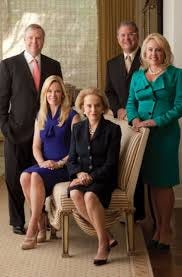
In 1944, an 18 year old Robert Dedman decided his life’s mission would be to make $50 million dollars by the time he was 50 years old and then give away $1 million dollars per year every year thereafter until he died.
This idea is known as “earning to give” with the whole idea being that instead of working for a charitable organisation, you can have a greater impact on the world by earning a lot of money, then giving that money away.
In order to pursue this mission, Mr.Dedman would need to find a career path where he could make a lot of money. He studied to be a lawyer in Texas which, of course is a lucrative career but not lucrative enough where could earn his $50 million by 50.
He needed a bigger opportunity vehicle.
The 3 to 1 epiphany
Mr.Dedman took up golf in the early 1950’s and while on holiday with his wife in 1957 in Palm Beach, he observed the economics of the local golf clubs. He noticed a pattern: the clubs were making money hand-over-fist from green fees and memberships, but they were bleeding cash on the construction and operation of opulent clubhouses.
He had a simple but slightly contrarian idea: Build three golf courses, but only one clubhouse.
By tripling the inventory (tee times) while keeping the overhead (the building) static, the margins would explode.
At the time, most clubs catered exclusively to the wealthy elite. Dedman realised that by using his 3-to-1 model, he could lower the cost per member, expand the pool of potential customers, and democratise the country club experience. Volume over exclusivity.
Proof of concept
After his holiday to Palm Beach, Mr.Dedman returned home to Texas and wasted very little time to test his theory. He bought a plot of land in Dallas and within 3 months he had taken deposits for over 2,000 members and was able to build 3 golf courses and a clubhouse without taking a loan. The club was called Brookhaven Country Club and it was a massive success.
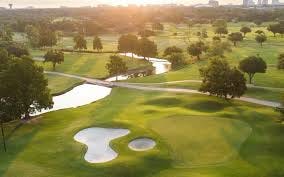
From there, the empire grew. Dedman began acquiring distressed golf clubs, applying his efficient management model to turn them around. By the time of his death in 2002, Dedman owned over 200 golf clubs and had amassed a net worth of over $1.2 billion.
I’ve tried finding the exact number Mr.Dedman ended up giving away as part of his original plan of earning to give but it was certainly north of $100 million, significantly surpassing his original goal of $50 million. He was quoted as saying, “they don’t put luggage racks on hearses”.
You could argue - but he was a billionaire, surely he could have given away more! Yeah maybe you have a point, but I think his impact on the world expanded beyond the exact dollars he gave away. Plus he gave away at least $100 million dollars!
Pinehurst - The Crown Jewel
When Mr.Dedman died his family decided to sell all the golf courses except 1 resort - Pinehurst. Pinehurst was the jewel in the crown, Mr Dedman described it as the St Andrews of the new world and it was the ultimate example of his desired business model.
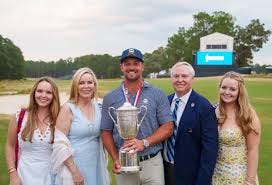
When we look at Pinehurst, from the outside looking in, you probably just see a world famous golf destination and you might think, of course they’re financially successful - their No.2 course has hosted multiple US Opens, how could they not be successful?
But let’s look deeper, yes this is a world famous golf destination but there are 10 golf courses at Pinehurst and they only opened their 2nd clubhouse recently. 10 golf courses! These US Open’s and other massive events are great marketing, not just for their US Open course but for the other courses too. When people make the voyage to play Pinehurst they will nearly always play more than just the US Open course.
When I bring up Pinehurst I still have a sick feeling in my stomach over Rory not winning that US Open, but I digress…

Do we see this pattern anywhere else? Bandon Dunes, one of the great new golf destinations, has 4 clubhouses and 7 courses. Cabot is another new famous golf destination brand with properties all over the world and their model at nearly all of their locations is to have at least 2 but sometimes 3 courses for every clubhouse.
Mr.Dedman pioneered this idea and the others that have followed in his footsteps have quietly copied his business model.
Keep the main thing the main thing
What’s the lesson here for the rest of us?
A few years ago, I came across the writings of a guy called Stephen Covey. He wrote a now famous book “7 Habits of Highly Effective People” that you may have heard of.
One of these 7 “habits” was that in business, “put first things first” or put it another way, “keep the main thing the main thing”.
What Mr.Dedman demonstrated via his success with ClubCorp (now rebranded to “Invited”) was that when it comes to golf, the main thing is the golf course. That part of the operation should be the focus with clubhouses being secondary. Sure, it’s nice to look at a pretty clubhouse and feel like you’re somewhere special and for golf clubs like Augusta National with almost unlimited access to money, they can afford to have all the “champions locker rooms” or wine cellars they want but for your local golf course, clubhouses are usually a drain on funds.
I love a nice clubhouse as much as anyone. To me, one of the highlights of my week is sitting down for a coffee in the clubhouse after a game of golf with my playing partners and chatting to other members or players after the round. We’ve all experienced this and it’s a beautiful thing. But the model that seems to drive financial success for golf clubs is to focus on the golf course and the clubs that are most successful from a financial perspective often have at least 2 courses for every clubhouse.
The golf course I grew up playing in my home town is a beautiful seaside course that sits on the cliffs. It’s not ranked in the top 100 courses in Ireland but, it’s a solid working man’s golf club and it’s beautiful. I won’t name the course but I love the place.
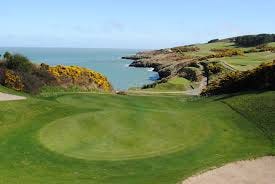
In 2004, to mark their centenary year, they decided to build a new clubhouse (this was in the middle of the Celtic Tiger/property boom in Ireland). This new clubhouse is beautiful and has spectacular views of the cliffs and the sea but the club has never financially recovered from this “investment”. They’re still struggling financially today.
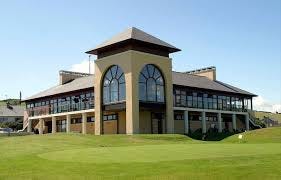
This is not intended as any sort of criticism of the people involved in this decision but rather to point out that clubhouses are usually a liability to a golf club, not an asset. They so often lose the golf club money from the large up front cost to build them and the yearly operating costs to run them.
The World’s Best Are Lean
On the flip side, look at the clubs that are getting it right today. Aside from Pinehurst, Bandon Dunes and Cabot there are other examples I’ve personally experienced.
A few years back, I played St. Andrews Beach in Australia. It’s a Tom Doak design currently ranked in the top 100 courses in the world. When it first opened, the project had some financial difficulties. To survive, they stripped it back and focused purely on the golf. For years, they operated out of a simple cabin.
They only recently opened a permanent clubhouse, but for a long time, the lack of one didn’t matter. The golf was world-class, and that was enough - the course spoke for itself.
I saw the exact same thing at Rosapenna in Ireland.
The resort already had a beautiful hotel and clubhouse serving their original two links (Old Tom and Sandy Hills). Then, in 2021, they opened their best course yet: St. Patrick’s Links.
It’s a five-minute drive from the main resort. When I pulled into the car park in August last year to play it for the first time and saw that the “clubhouse” was just a cabin for now, I was genuinely buzzing. It signaled to me that these guys are keeping the main thing the main thing. They weren’t wasting capital on vanity; they were putting every cent into the golf course until it makes sense to build something bigger.
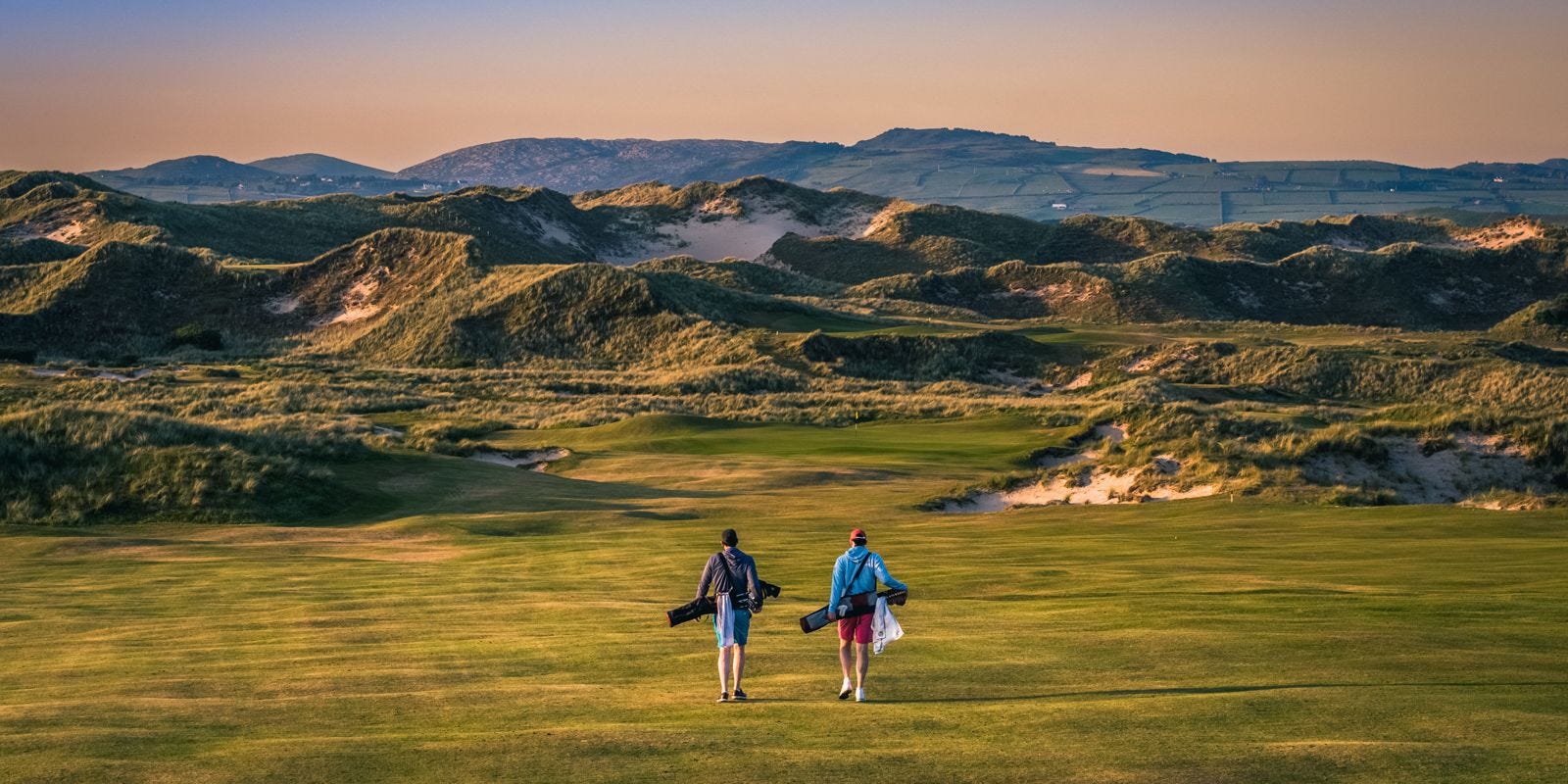
Rosapenna, Co. Donegal
Both St. Andrews Beach and St. Patrick’s are ranked in the top 100 in the world. My experience playing them wasn’t dampened by the lack of mahogany lockers or a grand dining room. I think of them both now as my favourite places to play golf.
Keep the main thing the main thing.
ClubCorp/Invited - some notes
They currently have nearly 400,000 members with 150+ golf courses in the portfolio including:
Indian Wells Country Club (2 courses)
Firestone Country Club (3 courses)
They have reciprocal member arrangements with:
Mission Hills, China (the world’s largest golf resort with 12 golf courses and 4 clubhouses)
Still owned by the Dedman family
Pinehurst (10 golf courses, 1 main clubhouse)
The Read:
7 Habits of Highly Effective People, Stephen Covey
The Caddie’s Line:
Padraig Harrington will make his 500th DP World Tour start this week - phenomenal achievement for Paddy but you probably wouldn’t guess who has made the most ever starts… It’s David Howell
Great read and a really interesting angle
Absolutely spot on. When Angeles National in LA built their clubhouse they had to more than double their green fees. It's not on my rotation now. I had the same reaction to the St. Patrick's setup--It's great they're all about golf. The only place that I've seen the new clubhouse construction work is Old Machrihanish. They lost their original to fire, but to make it work they serve both lunch and dinner, and their restaurant is one of the top 2 in the area so it's always busy.